

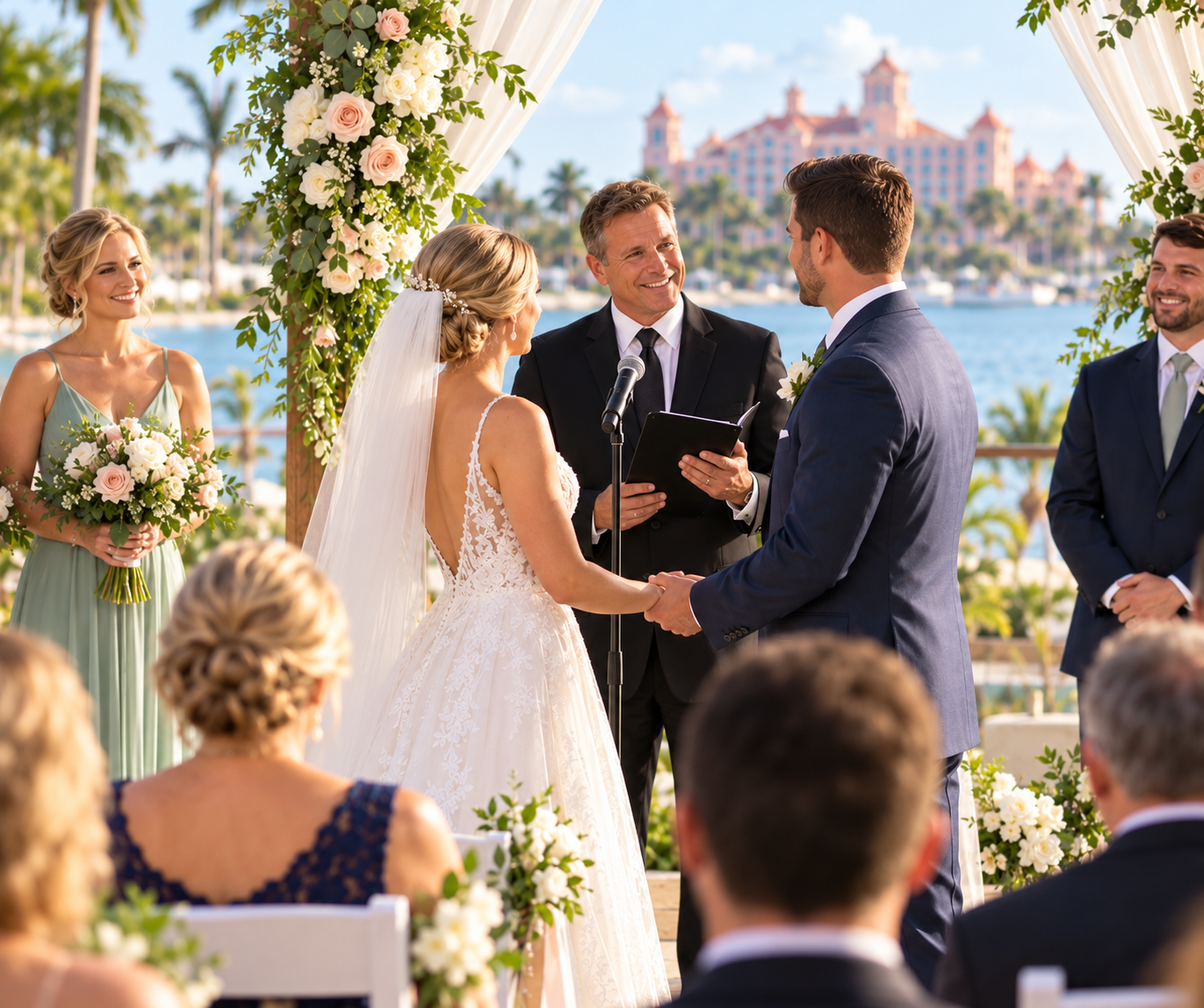
Wedding Officiant vs. Wedding Minister
Wedding Officiant vs. Wedding Minister: What’s the Difference?
When planning a wedding, couples often come across two terms: wedding officiant and wedding minister. While these titles can sound very different, the actual difference may be smaller than you think.
As a wedding officiant who performs religious, non-religious, interfaith, and fully custom wedding ceremonies, I often help couples understand which type of person is the right fit for their ceremony.
So, what is the difference between a wedding officiant and a wedding minister?
What Is a Wedding Officiant?
A wedding officiant is a person who performs a wedding ceremony. The term describes the role someone has rather than necessarily describing their religious beliefs.
Depending on the state and local requirements, an officiant could be a notary, a justice of the peace, a friend who has been ordained online, or a religious minister.
The important thing is that the person performing your ceremony is legally authorized to do so where your wedding takes place.
That means the word “officiant” alone doesn’t tell you whether your ceremony will be religious, secular, traditional, modern, or completely personalized.
What Is a Wedding Minister?
A wedding minister is generally someone with a religious or spiritual background who is qualified to perform wedding ceremonies.
Many couples assume that hiring a minister automatically means having a highly religious wedding ceremony. That isn’t necessarily true.
A minister can perform a beautiful ceremony without making religion the central focus.
For example, some couples have a deep personal faith but don’t want their wedding ceremony to feel like a church service. A wedding minister can help create a thoughtful balance between their faith and the romantic celebration they envision.
When Should You Choose a Minister?
If your faith is an important part of your life, choosing a minister can be a wonderful option.
You may want someone who can incorporate:
- Scripture
- Prayer
- Religious traditions
- Spiritual guidance
- A meaningful unity ceremony
A good minister won’t simply add these elements to your ceremony. They should understand and embrace their meaning with you.
What If You Don’t Want a Religious Ceremony?
You can still choose a minister.
This is something many couples don’t realize. A minister can create a warm, romantic, and meaningful ceremony without religious overtones.
I personally perform religious, non-religious, and interfaith ceremonies, and every ceremony I perform is customized to the couple.
Which One Is Right for You?
My best advice is simple: choose the person who fits your personalities.
Don’t make your decision based solely on a title or even shared religious beliefs. Get to know the person who will stand beside you and perform one of the most important moments of your life.
You want someone who understands your relationship, respects your beliefs, and can create a ceremony that feels like you.
Because whether you call them a wedding officiant or a wedding minister, the right person should do more than simply pronounce you married.
They should help tell your love story.

Owner, Sensational Ceremonies