

What Does a Wedding Officiant Do
What Does a Wedding Officiant Do on Your Wedding Day?
When most couples think about their wedding officiant, they probably picture someone standing at the front of the ceremony, reading the vows, and saying, “I now pronounce you husband and wife.”
But there is much more to being a great wedding officiant than simply reading a script.
After 18 years and more than 6,300 weddings, I’ve learned that some of the most important things an officiant does happen behind the scenes—and many couples never even notice them.
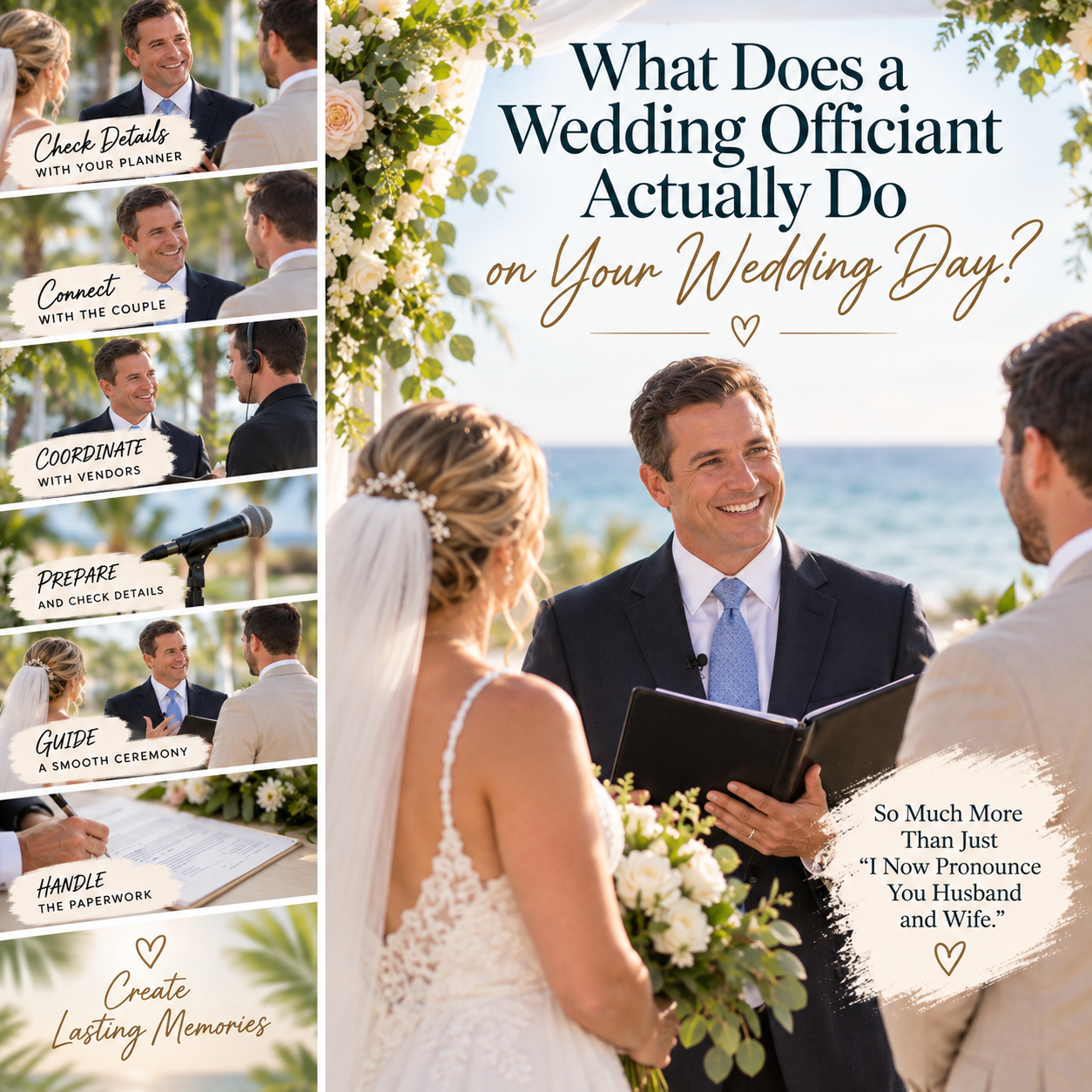
Before the Ceremony
When I arrive at a wedding, one of my first priorities is checking in with the wedding planner. I want to know if there have been any last-minute schedule changes or details I need to be aware of.
Then I stop by to see the groom and bride. I make sure they are comfortable, confirm that they are ready for the ceremony, and double-check the pronunciation of their names.
I also speak with the DJ and other vendors before the ceremony begins. A quick conversation can make sure everyone is on the same page and prevent unnecessary surprises.
Then comes the microphone check, getting everyone lined up, and preparing to begin.
During the Ceremony
Once the ceremony starts, my job is to keep everything moving smoothly.
I direct the couple through each part of the ceremony, including the vows and ring exchange. I make sure everyone knows what to do and when to do it. I also help eliminate those awkward pauses and little hiccups that can make a ceremony feel uncomfortable.
At the end, I ask the guests to stand and celebrate as I present the newly married couple.
That moment should feel exciting—not confusing.
Experience Makes a Difference
A seasoned officiant knows that weddings rarely go exactly according to plan.
Maybe an important family member hasn’t arrived yet. Maybe the schedule changes. Maybe someone needs help tying a tie or pinning on a boutonniere.
None of that should rattle an experienced officiant.
The best officiants simply adapt and keep things moving.
One of my favorite examples is what happens after the ceremony. The mother of the groom or a grandmother may have been escorted into the ceremony but is sometimes left sitting on the front row afterward. If I notice someone has been left behind, I’ll extend my arm and escort them out.
Those small moments matter.
After the Ceremony
My job doesn’t end when I pronounce the couple married.
I have the witnesses sign the marriage license, place it safely back into my binder, and mail it out the next day. I also take pictures with the couple before quietly heading out.
And yes, sometimes couples expect their officiant to stay for the reception and bless the meal. But the reception is for the couple, their family, and their friends—not the officiant.
More Than a Ceremony
A great wedding officiant does more than perform the legal ceremony. They help create an experience that feels smooth, personal, and special.
After thousands of weddings, my philosophy is simple: always look for an opportunity to make the ceremony special for everyone involved.
Because your wedding ceremony isn’t just a moment for the bride and groom.
It’s a moment your family and friends will remember, too

Owner, Sensational Ceremonies